A bike can feel fine one day and start making noises or shifting poorly the next. Small changes—like a soft brake lever, a skipping chain, or a tire that keeps losing air—can signal wear or a part that needs adjustment. Checking your bike regularly helps you catch problems before they interrupt a ride or affect control. Here are common signs to watch for, simple checks you can do at home, and situations where a shop tune-up makes sense.
Notice Changes While Riding
Pay attention to how the bike responds. Brakes that squeal, feel weak, or pull unevenly may need adjustment or new pads. Gears that hesitate, jump between cogs, or make repeated clicking sounds can point to cable tension, a worn chain, or other shifting issues. If steering feels loose or the bike wobbles, stop riding and check it before heading out again.
New sounds are useful clues. A rhythmic rub may come from a wheel touching a brake pad, while a clunk can indicate a loose component. Try to identify when the noise happens: while pedaling, braking, or coasting. That detail can help you describe the issue to a mechanic. Do not ignore sudden changes in handling, braking, or steering.
Check Tires, Chain, and Wheels
Inspect tire pressure before rides and inflate tires within the range printed on the sidewall. Look for cuts, cracks, bulges, embedded debris, or worn tread. A tire that repeatedly goes flat may have a puncture, a damaged valve, or an issue with the rim tape. Remove debris only when it is safe to do so, and replace a tire with visible structural damage.
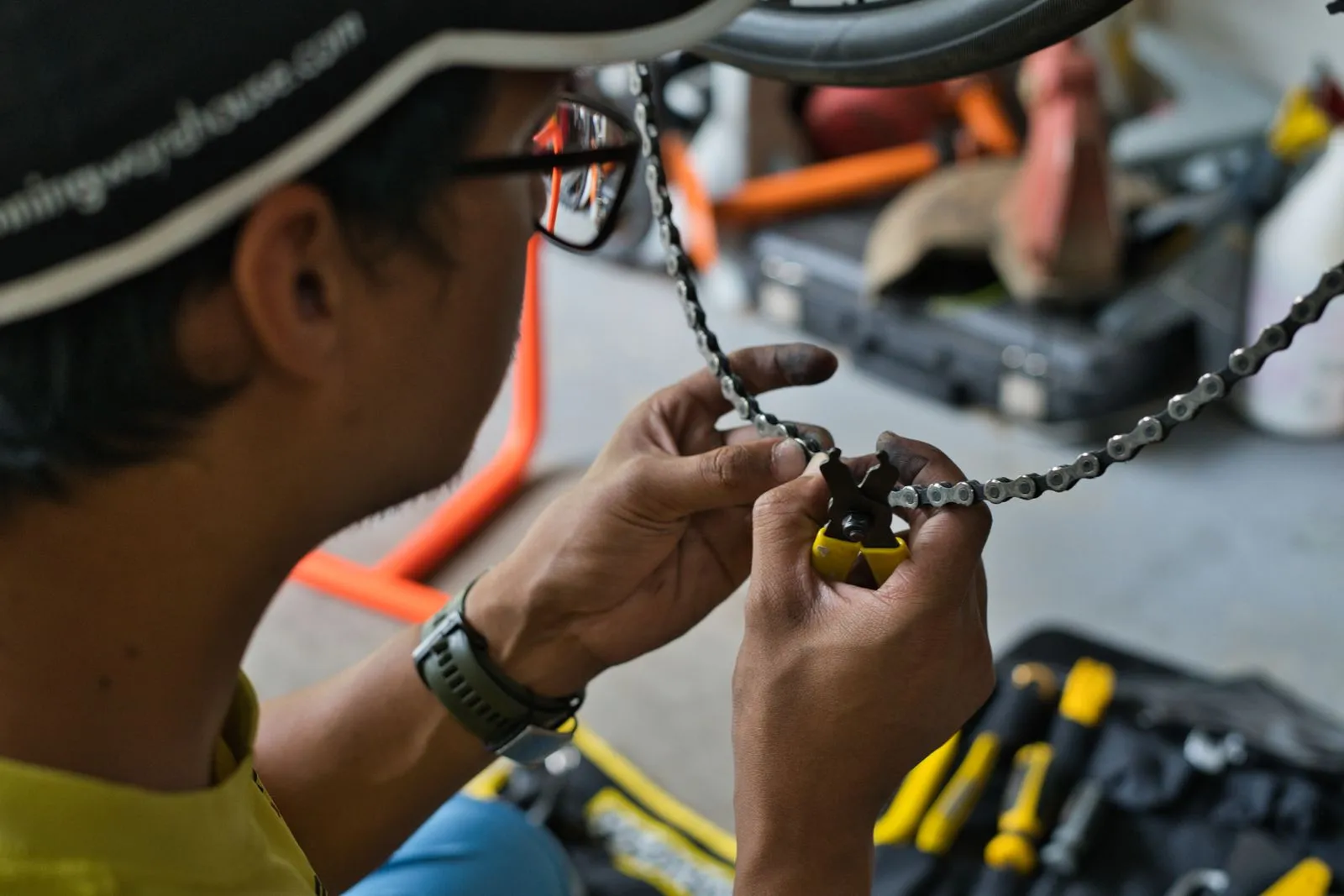
A dry, dirty, or rusty chain can wear drivetrain parts faster and make pedaling rough. Wipe it clean, apply bicycle chain lubricant, and remove excess lubricant from the outside of the links. Check that wheels spin without obvious side-to-side movement and that quick releases or thru-axles are secure. If a wheel is badly out of true or a bearing feels rough, get it inspected.
Test Safety-Critical Parts
Before each ride, squeeze both brake levers and confirm that the brakes engage firmly before the levers reach the handlebar. Check that the pads contact the rim or rotor as intended and do not appear worn down. For disc brakes, keep oil and lubricant away from the rotors and pads. If braking remains weak after a basic visual check, have a mechanic diagnose it.
Look over the frame and fork for cracks, dents, or other damage, especially after a crash or hard impact. Confirm that the handlebar, seat, and pedals feel secure, and check that lights and reflectors work if you ride in low light. Avoid riding a bike with a damaged frame, unreliable brakes, or a component that shifts unexpectedly; these issues need attention before the next trip.
Know When to Book Service
A professional tune-up is worth considering when several adjustments are needed, shifting or braking problems persist, or you are unsure how to assess a worn part. A mechanic can inspect the drivetrain, wheels, bearings, cables, and fasteners, then explain which work is necessary. Bring a clear description of the symptoms and mention any recent crash, repair, or extended period of storage.
How often your bike needs service depends on how much you ride, where you ride, and the conditions you encounter. Wet, dusty, or muddy routes can call for more frequent cleaning and inspection than dry paved rides. Rather than relying only on a calendar, use regular checks and arrange service when performance changes or parts show wear. Mile High Cycles in Denver can help assess a bike that needs attention.
Listen for new noises, watch for changes in braking or shifting, and inspect tires, chain, wheels, and fasteners regularly. Stop riding if a safety-critical part is damaged or unreliable. If a problem persists or you cannot identify its cause, arrange a professional inspection before your next ride.